 1 / 4
Handheld Viscometer
Model: JS-SC
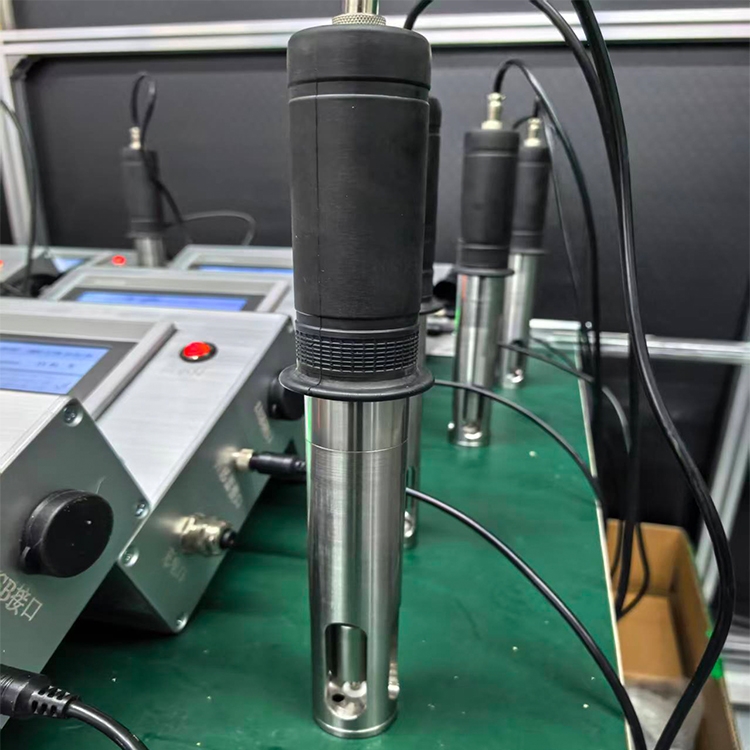
This product is a portable handheld instrument that performs instant measurement by immersing it in the fluid. The sensor is a solid-state structure with no moving parts and is connected via a flexible circuit to a handheld microprocessor with a display. The unit is powered by a small battery. Its rugged, lightweight and wear-resistant construction makes it ideally suited to on-site measurement in factories or laboratories, even under harsh conditions.
Product Features
- The JS-ZD handheld viscometer is a portable handheld viscosity meter with immersion-type real-time measurement and no calibration required. Its solid-state sensor has no moving parts and is rugged and durable. Battery-powered, compact and lightweight, it suits a wide range of harsh environments. With no restriction on sample volume, it delivers accurate viscosity readings within seconds.
Application Scenarios
- Suitable for rapid on-site testing in factory workshops and laboratories, especially for operations in harsh environments and real-time quality control.
Technical parameters
| Product Name | Handheld quick viscometer |
|---|---|
| Product Model | JS-SC handheld viscometer |
| Detection Technology | Rotational method technology |
| Product Features | High precision, long-term stability, no moving parts, maintenance-free |
| Probe Connection Type | Split design, probe separate from main unit |
| Manufacturer | Supervised by the Technical Department of Shanghai Runxinsen Electronic Technology Co., Ltd. |
| Measuring Range | 0-10000 mPa·s (CP、CST) |
| Temperature Range | -10~300 ℃ |
| Temperature Sensing Element | PT1000 |
| Viscosity Accuracy | ±0.2%FS |
| Temperature Accuracy | ±1℃ |
| Power Supply | 24VDC 0.5A |
| Wide Voltage Range | 12~30VDC |
| Output Mode | RS485 (MODBUS-RTU) or 4–20 mA |
| Response Time | 0.5s |
| Fluid Pressure | 40bar |
| Probe Material | 316L stainless steel |
| Shell Material | 304 stainless steel |
| Protection Rating | IP67 |
| Function 1 | Display of measured sample viscosity |
| Function 2 | Sample classification adjustment |
| Function 3 | Correction of measured sample viscosity |
| Function 4 | Step adjustment levels of measured viscosity value |
| Function 5 | Light alarm on upper-limit setting |
| Communication Protocol Version | V1.03 |
| Baud Rate | 9600 |
| Data Bits | 8 bits |
| Stop Bits | 1 bit |
| Parity | None |
| Wiring Definition | Brown: 12–30 VDC, black: GND, white: TR+, blue: TR− |
| Recommended Serial Device | UT-890 (RS485 to USB) |
Product Manual
Catalog
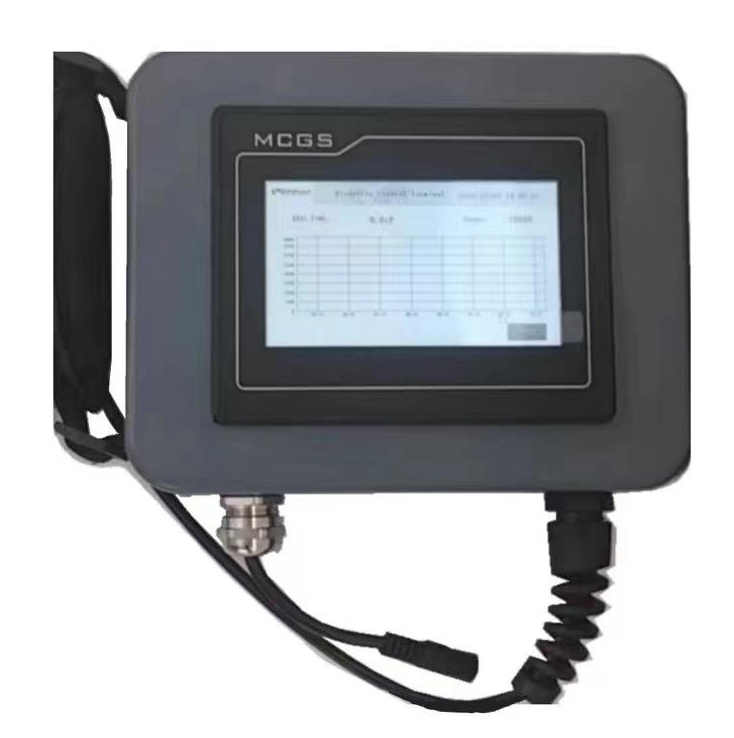
The JS-ZD viscometer is a portable handheld instrument that measures viscosity instantly by inserting the sensor into the fluid. The sensor section is of solid construction with no moving parts, connected by a flexible cable to a handheld microprocessor with a display. The instrument is powered by a small battery. This robust, lightweight and wear-resistant design makes it ideal for on-site measurement in factory or laboratory environments under demanding conditions.
Unlike a traditional rotational viscometer, this instrument accepts samples of any volume — there are no specific volume or capacity limits for the fluid — while still ensuring accurate readings. It therefore measures liquid viscosity fundamentally, without any prior sample conditioning, and analyses, evaluates and reads the sample rapidly. When temperature changes or time delays occur, a sample can no longer reflect the true viscosity of the liquid itself; this instrument's rapid detection, however, provides real-time measurement — no sampling is needed, simply insert it into the liquid for a few seconds to obtain the viscosity value.
I. Working Principle
At the end of the sensor there is a vibrating hammer connected by a rod-shaped bearing, which produces vibration at a standard frequency. During vibration, the moving part of the sensor shears the measured liquid; because viscosities differ, the drag force on that part differs and thus different amounts of energy are dissipated. In each vibration cycle the dissipated energy is measured by the sensor circuit and shown on the microprocessor display, and the viscosity value can be derived from this energy loss. The viscometer is therefore sometimes regarded as a vibrational viscometer. The device can measure not only viscosity but also density, i.e. viscosity and density. In practice viscosity varies over a wider range than density, and liquid density can be obtained by entering its standard value on the display.
Note: this product can be supplied with either a vibration-method probe or a rotation-method probe; please determine first which measurement method you require. Note: the Chinese national standard (GB) does not recommend the vibration method above 1000 mPa·s.
II. Product Features
- Handheld, portable and easy to use
- Vibration-principle design with high accuracy and stable performance
- Probe made entirely of 316 material with a fully sealed design, suitable for any harsh environment
- Fluid does not pass through the interior; no wearing parts, easy to clean and maintain
- Measurement unaffected by external vibration
- Corrosion and pressure resistant
- One-key calibration
III. Technical Parameters
- Sensor:
Accuracy: 2% of reading
Measuring range: 0 ~ 9000 mPa·s
Minimum sample volume: 15 mL
Temperature range (sensor): -20~80℃
Overall dimensions: diameter 4 cm, length 15 cm
Weight: 70 g
- Display material:
Parts in contact with liquid: 316 stainless steel
Housing: acetal
Protection rating: IP65
Safety certification: safe area
Signal processor:
Processor unit: HP550
Protection rating: IP65
- Weight: 500 g
- Power: 4 x AA (or equivalent) alkaline batteries
- Dimensions: 20 cm long x 15 cm wide x 8 cm high
- Option: highly polished sensing surface
IV. Industries and Applications
Biotechnology and pharmaceutical industry, e.g. medicines and additives
Cosmetics industry, e.g. shampoo, face cream, toothpaste
Coatings industry, e.g. composites and glues
Inks and dyes industry, e.g. printing, dyeing, coating
Petroleum: petrochemical products, oil and gas production, fuel transport, asphalt, sludge, fuel oil, polymers
Chemicals: polymers, resins, solvents, ink pigments, lubricants, adhesives
Building materials: paints, ceramics, coatings, glass industry
Food: fermented products, preserves, confectionery and syrups, food processing, emulsions, fruit juices and teas
Paper: starch-based adhesives
Metallurgy: mineral processing
Water conservancy: water treatment
V.Operating Steps
The operator simply immerses the stainless-steel sensor in the liquid to measure viscosity immediately. Measurement is possible as soon as the probe tip is covered by liquid; container size and liquid volume do not affect the result.
VI. Calibration
All instruments are verified at the factory with more than three reference samples. The standard reference fluid is certified silicone oil; in some cases, other liquids may be used on special request.
VII. Product Advantages
- High accuracy, fast response, high reliability;
- Vibration principle: barely affected by flow rate, ambient vibration or fouling blockage;
- No moving parts, no wear, long service life, easy maintenance;
Document Download
手持式快速粘度计.doc
Click to download document
Need more information?
For any product inquiries or technical questions, please feel free to contact us at any time.